Rocky Mount, VA Electrical Troubleshooting: Why Breakers Trip
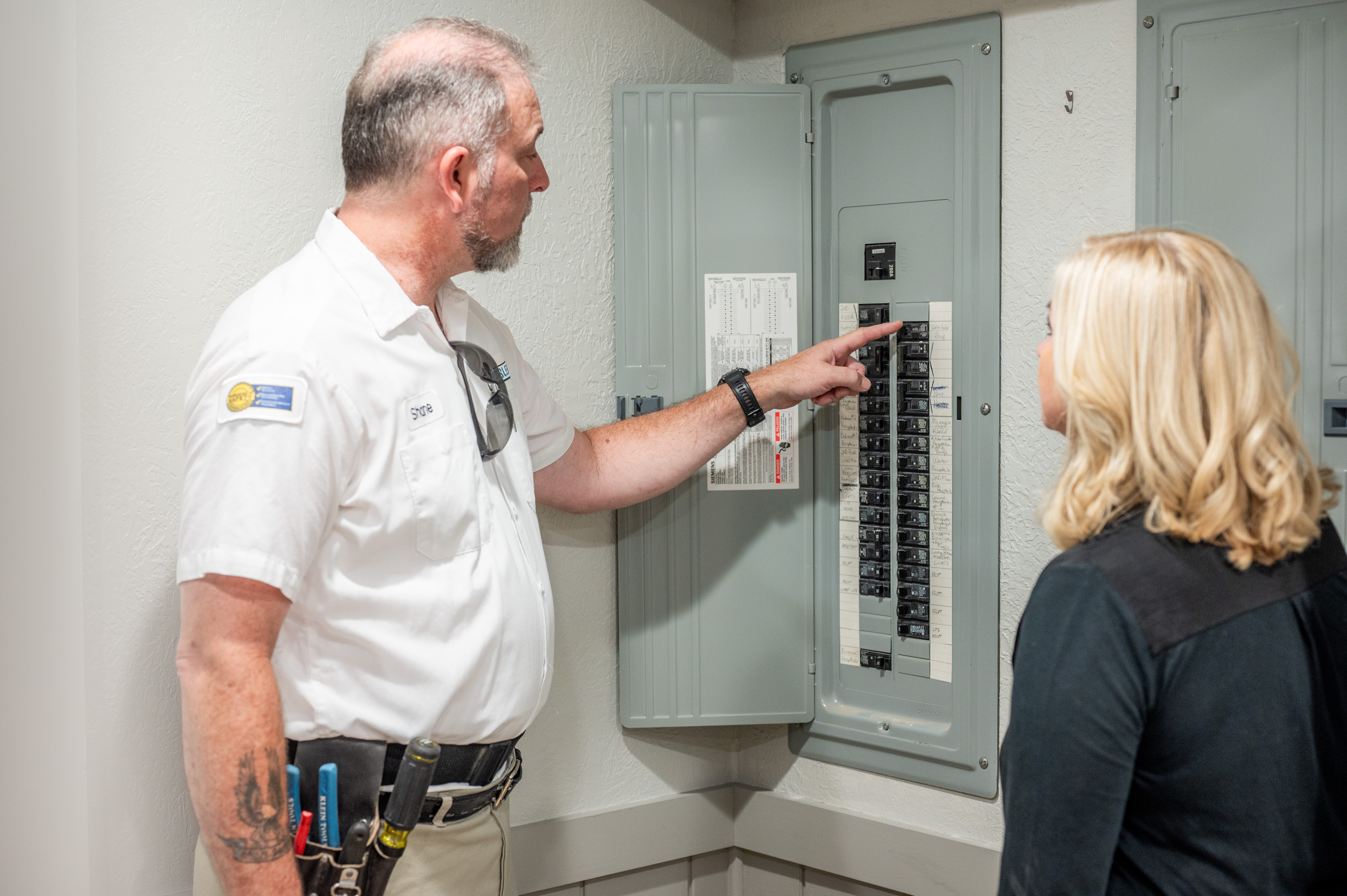
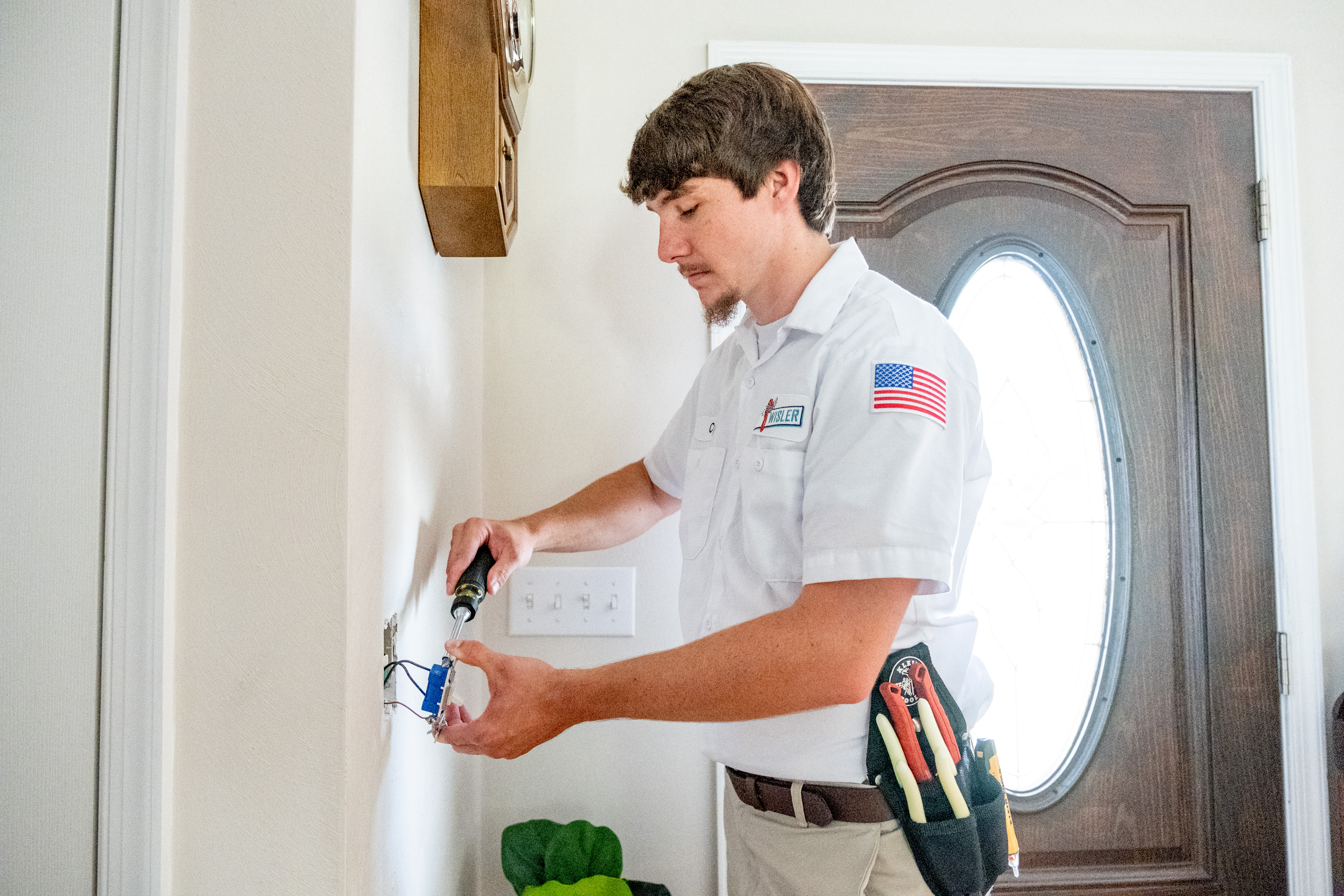
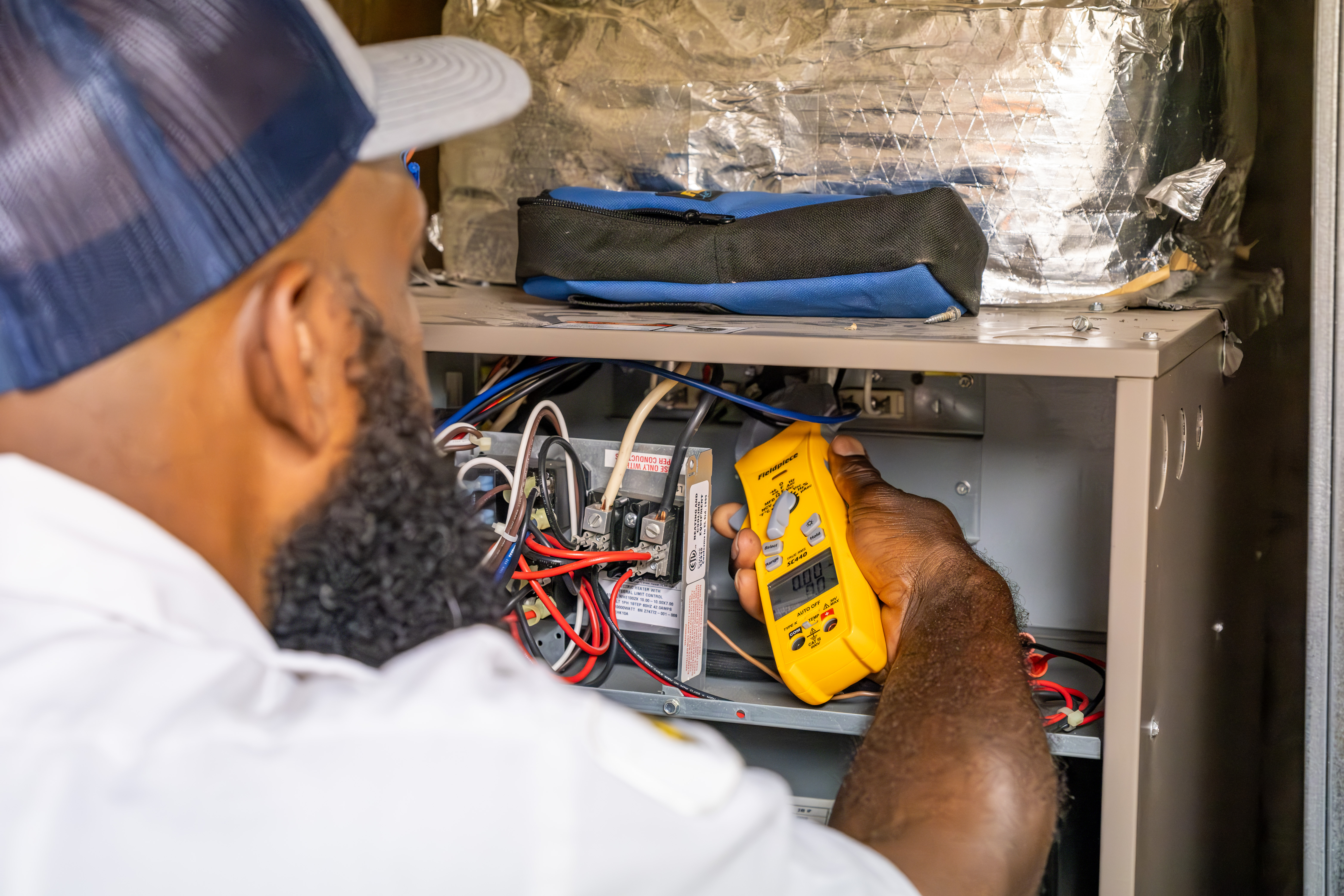
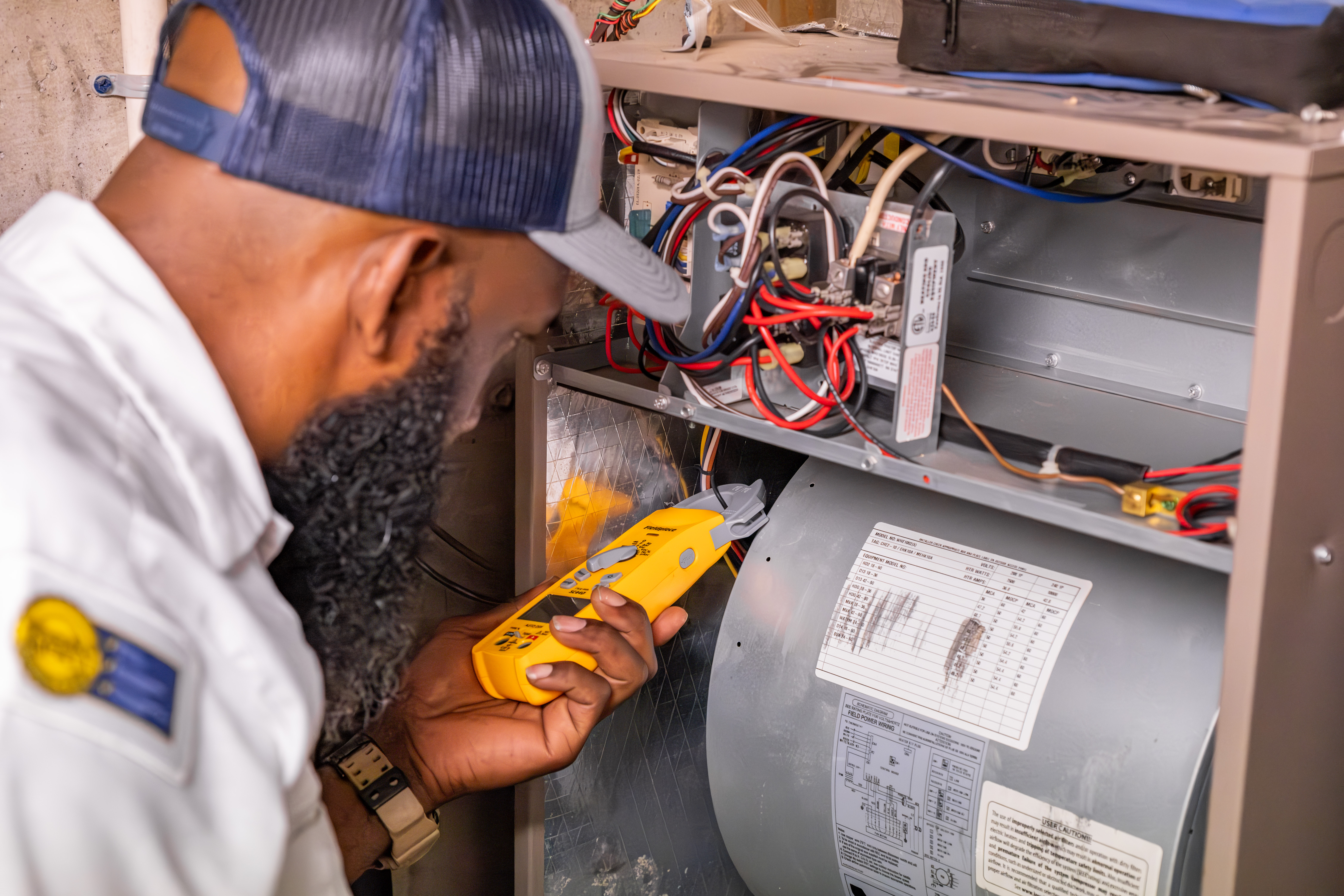
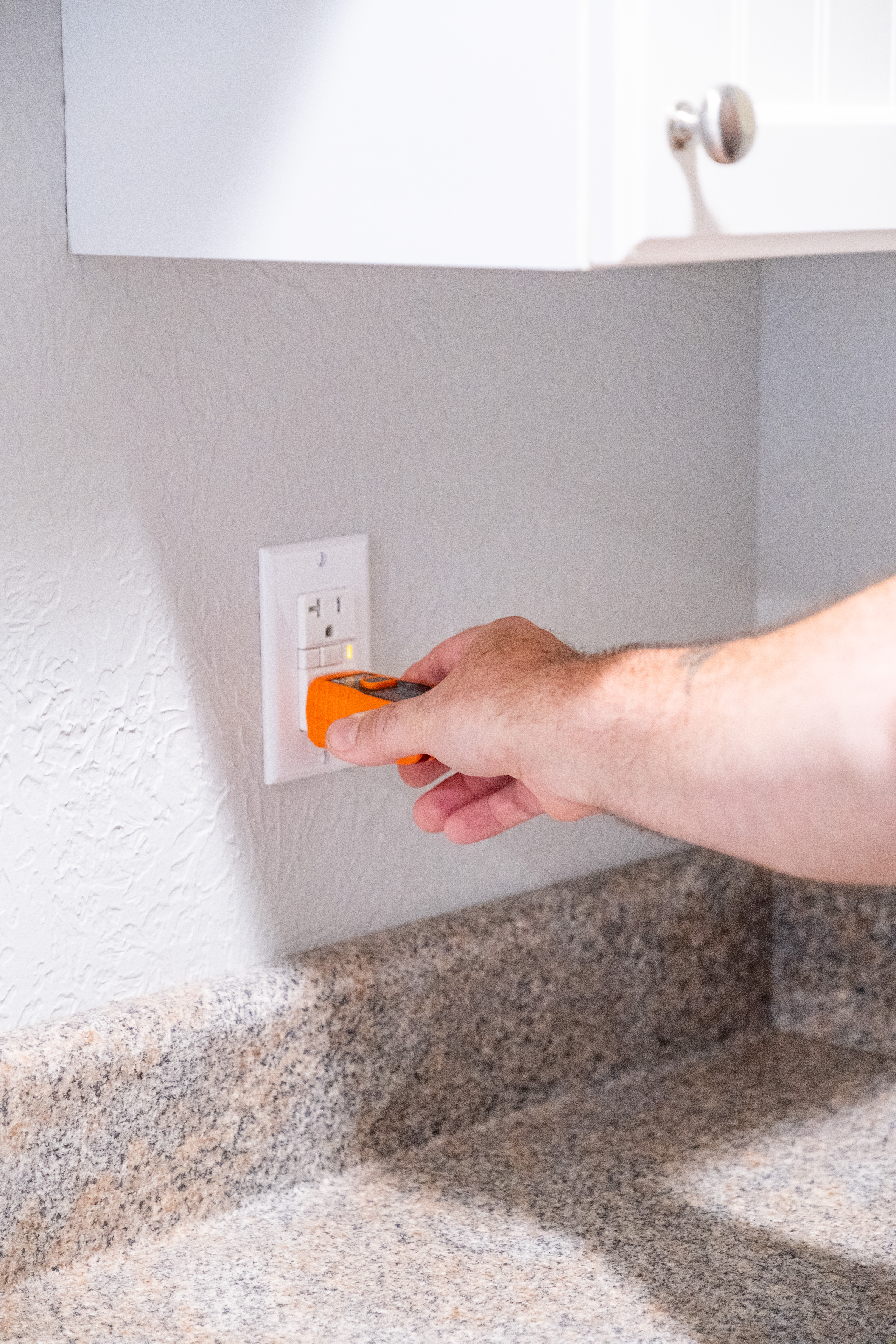
A breaker that keeps tripping is more than an annoyance. It is a safety signal from your electrical system. If your circuit breaker keeps tripping, this guide explains why it happens, what the trip means, and how to fix the root cause. We will show quick checks you can do safely, when to call a licensed electrician, and how Roanoke homeowners can prevent repeat trips. Save on inspections with current offers below.
What a Breaker Trip Really Means
A circuit breaker trips to stop a problem before it becomes a fire or shock hazard. Inside the breaker, two protections work for you:
- Thermal protection reacts to overload. Too much current produces heat that bends a bimetal strip and opens the circuit.
- Magnetic protection reacts to short circuits. A surge of current triggers a magnet to trip the switch fast.
Common trip types you may see:
- Overload trip: Happens after a few seconds or minutes when a circuit carries more than it should.
- Short circuit trip: Instant trip with a sharp pop or spark. Often a damaged wire or failed device.
- Ground fault trip: Current leaks to ground. GFCI devices and some breakers detect this and trip to prevent shock.
Key fact: Most 15‑amp and 20‑amp circuits are designed for up to 80 percent continuous load. That is about 12 amps on a 15‑amp circuit and 16 amps on a 20‑amp circuit. Running above that for hours can trigger an overload.
The Most Likely Reasons Your Breaker Keeps Tripping
Several everyday habits push circuits past their limit. Others point to real faults that need a pro.
- Too many appliances on one circuit. Space heaters, hair dryers, and microwaves draw heavy current.
- Acords and outlets in poor condition. Melted plugs, loose blades, or back‑stabbed receptacles cause heat and arcing.
- Faulty or aging devices. Motors in fridges, disposals, or AC air handlers can short when they fail.
- Moisture intrusion. Bathrooms, kitchens, garages, and docks around Smith Mountain Lake see frequent GFCI trips if water gets into boxes.
- Nuisance trips from AFCI/GFCI if wiring is outdated or damaged. Loose neutrals and shared neutrals are common culprits.
- Panel issues. Corrosion, double‑tapped breakers, or undersized panels cause frequent trips across many circuits.
Pro insight: A typical 1500‑watt space heater draws about 12.5 amps at 120 volts. Two on one 20‑amp kitchen circuit will likely trip it.
How to Troubleshoot an Overloaded Circuit Safely
You can isolate an overload without opening any boxes.
- Identify the circuit. Note which lights and outlets die when the breaker trips.
- Unplug items. Remove high‑draw devices like heaters, toasters, or vacuums.
- Reset the breaker. Push firmly to OFF, then to ON.
- Add devices one by one. When the trip returns, the last item or the total load is the trigger.
If reducing load stops the trips, the fix options are simple:
- Relocate appliances to different circuits.
- Add dedicated circuits for heavy loads.
- Plan a panel or circuit upgrade if your lifestyle has outgrown the wiring.
Safety note: If a breaker trips instantly with a spark or burning smell, stop. Do not reset again. Call a licensed electrician.
Short Circuits and Ground Faults: What They Look Like
Short circuits and ground faults act fast. Here is how to tell them apart.
- Short circuit:
- Breaker trips immediately when you turn on a switch or plug in a device.
- You may see smoke, hear a pop, or smell burnt plastic.
- Often tied to pinched wires, failed motors, or a screw through a cable during a remodel.
- Ground fault:
- GFCI outlet or breaker trips and will not reset while a load is connected.
- Common in wet or outdoor locations. Think bathrooms, garages, docks, and landscape lighting.
- Often caused by water in a box, worn cords, or a device with internal leakage.
What a pro checks:
- Continuity and insulation resistance testing to find the faulted leg.
- Device isolation to confirm it is the circuit and not the appliance.
- Box‑by‑box inspection for damaged splices, nicked insulation, or shared neutrals.
AFCI and GFCI Breakers: Protection and “Nuisance” Trips
Modern codes require more protection than older homes provide. Many Roanoke houses built before 2008 lack AFCI on most living areas. AFCI detects arcing that can start fires inside walls.
- AFCI trips can be caused by damaged cords, loose outlets, shared neutral wiring, or certain motor start‑ups.
- GFCI protects people from shock by tripping at small leakage currents. It is required in bathrooms, kitchens, garages, outdoor spaces, and near water.
If your AFCI or GFCI trips often:
- Replace worn cords and outlets.
- Have a licensed electrician test for shared or loose neutrals.
- Consider a panel refresh with new breakers if your units are older or mixed brands.
Hard fact: The national electrical code expanded AFCI protection to most 120‑volt 15 and 20‑amp dwelling circuits in recent editions. Older homes often benefit from upgrades for safety and reliability.
When the Problem Is in the Panel
Your breaker may be doing its job, but the panel itself can cause trips and dimming.
- Loose lugs and corroded bus bars cause heat and intermittent loss.
- Double‑tapped breakers feed two wires where one is allowed. That connection can loosen and arc.
- Undersized panels run out of spaces as you add EV chargers, hot tubs, or a finished basement.
What we look for during a professional evaluation:
- Thermal scanning for hot spots at the main and branch breakers.
- Torque checks on lugs to manufacturer specs.
- Load calculation to confirm your service and panel size fit current use.
Signs you should call today:
- A warm or buzzing panel cover.
- Rust or water marks in or around the panel.
- Multiple circuits tripping in different rooms.
DIY vs Pro: What You Can Safely Do
Safe homeowner steps:
- Reduce loads on a tripping circuit and reset properly.
- Replace a clearly damaged plug‑in device or cord.
- Test and reset GFCI outlets on the same circuit.
Always call a pro for:
- Repeated instant trips.
- Burnt smells, scorch marks, or sparking.
- Breakers that will not reset or feel loose.
- Panel work, new circuits, or aluminum wiring corrections.
Why a licensed electrician matters:
- We test with calibrated meters and insulation testers to find the exact fault.
- We correct the root cause, not just replace a breaker.
- You get documentation for insurance and resale if we perform panel or wiring upgrades.
Prevent Trips With Smart Upgrades
Stopping trips is about right‑sizing your system to your lifestyle.
- Add dedicated circuits for space heaters, home offices, gyms, and sump pumps.
- Upgrade kitchen circuits to handle microwave, toaster oven, and coffee maker loads.
- Install whole‑home surge protection to protect sensitive AFCI and GFCI devices.
- Replace worn outlets with high‑quality, tamper‑resistant, back‑wire models.
- Consider a panel upgrade if you are adding an EV charger, hot tub, or workshop tools.
Pro tip for lake properties: Docks on Smith Mountain Lake should have regular electrical inspections. Water, weather, and pests age wiring faster at the shore.
Real‑World Examples From Roanoke Homes
Here are common service calls we handle around Roanoke, Salem, Vinton, and Cave Spring.
- Space heater overload in a bonus room. We added a dedicated 20‑amp circuit and the trips stopped.
- AFCI trips from a shared neutral in a finished basement. We separated neutrals and corrected splices.
- Kitchen remodel with frequent breaker trips. A load calculation showed undersized circuits. We added two small‑appliance circuits per code and upgraded the panel.
- Dock GFCI trips near Goodview. We sealed boxes, replaced devices, and performed a dock safety inspection.
Two grounding facts that guide our work:
- A 1500‑watt heater at 120 volts draws about 12.5 amps. Two on one 20‑amp circuit push the limits.
- Code requires overcurrent protection sized to at least 125 percent of continuous loads. That is why the 80 percent rule matters for long run times.
How Our Process Solves Repeated Trips
We fix the symptom and the source. Here is our step‑by‑step approach.
- Safety check. We look for heat, damage, or moisture that would stop the reset.
- Circuit mapping. We identify every device on the affected run.
- Metered testing. We measure load, voltage drop, and fault conditions.
- Targeted repair. We replace failed devices, correct splices, and secure neutrals and grounds.
- Panel health. We tighten, clean, and test breakers and lugs. We replace weak breakers when needed.
- Future‑proofing. If your use has changed, we add circuits or upgrade the panel with room to grow.
Why homeowners choose us:
- Fast response with emergency service available in Roanoke and nearby cities.
- Background‑checked, drug‑tested technicians trained weekly.
- Every job backed by a 100 percent satisfaction guarantee.
- Upfront pricing and financing options for larger projects.
Costs, Timelines, and What to Expect
Every home is different, but most troubleshooting visits follow a simple pattern.
- Diagnosis: 60 to 120 minutes for most single‑circuit issues.
- Common fixes the same day: outlet or switch replacement, splice repairs, device isolation.
- Larger work: new circuits, panel upgrades, or rewires are scheduled and permitted as required.
Ways to save today:
- Bundle electrical work with plumbing or HVAC to unlock multi‑trade savings.
- Join our membership program for repair discounts and priority scheduling.
- Ask for an upfront estimate. We provide it before work starts so you know the price.
When a Panel Upgrade Makes Sense
Breaker trips can be the canary in the coal mine for a crowded or aging panel.
Consider upgrading if you notice:
- You rely on multiple power strips and extension cords.
- Lights dim when large appliances start.
- You plan an EV charger, hot tub, or finished space.
An upgrade delivers:
- More circuits and capacity for modern loads.
- New AFCI and GFCI protection where required.
- Cleaner wiring, labeled spaces, and a safer home.
We handle permits in Roanoke and surrounding jurisdictions and coordinate utility shutoffs. Your upgrade includes a final safety check and labeled directory.
Maintenance That Prevents Trips
Routine inspections catch problems early. Our team performs electrical safety checks that include:
- Panel inspection, torque verification, and thermal scan.
- Random outlet and switch checks for heat and loose terminations.
- GFCI and AFCI performance testing.
- Grounding and bonding verification.
Tie‑in benefit: Our company‑wide maintenance culture is proven on HVAC with our Without Worry Comfort Checks. We bring that same rigor to electrical so you get consistent, documented care across your whole home.
Special Offers for Roanoke Homeowners
- Special Offer: $99 Electrical Safety Inspection. Protect your home and catch issues before they trip. Schedule today.
- Diamond Club Members: Save up to 10% on electrical service repairs and enjoy priority scheduling.
- Free Upfront Estimates: Know the price before work begins on troubleshooting and repairs.
- Bundle and Save: Get 5% off when you combine trades like Electrical, Plumbing, HVAC, or Water Treatment.
Call (540) 238-0320 or book at https://callwisler.com/ to claim your savings.
What Homeowners Are Saying
"We had electrical work done in June 2026 in Salem, VA... Shane was FANTASTIC... very knowledgeable... and a pleasure to be working in our home."
–Arno F., Salem
"Patrick from Wisler arrived on time and diagnosed my electrical issue... explained things as he proceeded... replaced the problem components and my issue was resolved."
–Todd F., Electrical Repair
"Today’s electrical inspection and repair was done quickly and efficiently."
–Carl P., Electrical Troubleshooting
"Responded quickly... got a person out within a few hours... thorough troubleshooting and then fixing the problem... final bill was reasonable."
–Warrior M., Electrical Repair
Frequently Asked Questions
Why does my breaker trip when I plug in a space heater?
Space heaters draw about 12.5 amps. If other devices share the circuit, the load exceeds the breaker rating and it trips to prevent overheating.
Is it safe to keep resetting a breaker that trips?
No. One reset after removing loads is fine. Repeated trips signal a fault or overload. Stop and call a licensed electrician for diagnosis.
What is the difference between AFCI and GFCI?
AFCI prevents fires from arcing in wiring. GFCI protects people from shock by detecting leakage to ground. Many homes need both in different areas.
Could a bad breaker be the problem?
Yes. Breakers wear out. Heat and age weaken the trip mechanism. A pro can test the load, wiring, and breaker to confirm before replacing.
When should I upgrade my electrical panel?
Consider an upgrade if you add large loads like an EV charger or hot tub, run out of spaces, see corrosion, or experience frequent trips across circuits.
The Bottom Line
A breaker that keeps tripping is a safety alert, not a nuisance. Fixing it protects your family and your home. For fast, expert help with a circuit breaker keeps tripping in Roanoke, our licensed team finds the root cause and makes it right the first time.
Call, Schedule, or Chat
- Call now: (540) 238-0320
- Book online: https://callwisler.com/
- Coupon to mention: $99 Electrical Safety Inspection and up to 10% off repairs with Diamond Club.
Get safe, dependable power today.
Call (540) 238-0320 or schedule at https://callwisler.com/ for fast electrical troubleshooting and repair in Roanoke, Salem, Vinton, and Cave Spring. Ask about the $99 Electrical Safety Inspection and Diamond Club savings to stop trips and protect your home.
About Wisler Plumbing, Heating, Cooling & Electric
Proudly serving Roanoke since 1986, Wisler delivers expert electrical troubleshooting, repairs, and upgrades. Our technicians are background checked, drug tested, and trained weekly. We back every job with a 100% satisfaction guarantee. Awards include Virginia Business Best Places to Work 2024 and the Angi 2022 Super Service Award. Count on upfront pricing, fast response, and full‑service convenience across electrical, plumbing, HVAC, and water treatment.
Sources12
Source links open in a new tab.
- $500 off Complete Generator Installcallwisler.com (opens in a new tab)
- Discounted repair pricing up to 10% off.callwisler.com (opens in a new tab)
- Contact us today for a free consultation.callwisler.com (opens in a new tab)
- Free estimate on our Heater Repair servicescallwisler.com (opens in a new tab)
- Happy comment by Arno Fujigoogle.com (opens in a new tab)
- Happy comment by Todd Fishergoogle.com (opens in a new tab)
- Happy comment by Tim Warrengoogle.com (opens in a new tab)
- Happy comment by Carl Parsonsgoogle.com (opens in a new tab)
- Fincastle VA HVAC, Plumbing & Electrical Services – Trusted Technicians for Your Homecallwisler.com (opens in a new tab)
- Roanoke, VA Heating Maintenance & Safety Tune-Ups | Furnace & Heat Pump Inspections, Cleaning & Fall Checkupscallwisler.com (opens in a new tab)
- Troutville VA Plumbers, Electricians & HVAC Pros – Trusted Home Comfort & Repair Expertscallwisler.com (opens in a new tab)
- Ferrum VA Plumbing, Heating & Cooling – Local HVAC and Plumbing Repair Specialistscallwisler.com (opens in a new tab)